Best Time to Visit Tanzania for a Safari
There is no single best month. Through the year, four things change: what you see, how easily you see it, how many other vehicles are there, and what it costs.
Last updated
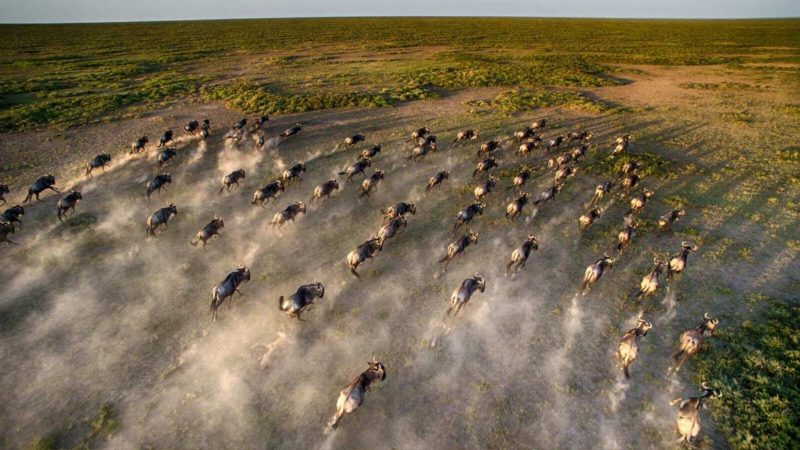
The honest answer is that Tanzania has no bad safari season, only different ones. Through the year, the changes are how concentrated the animals are, how easy the roads are, how many other vehicles you share a sighting with, and what you pay.
The dry season, roughly June to October
This is the peak season, and it earns the label. Surface water disappears, so animals pull back toward rivers and permanent waterholes and become far easier to find. The grass is short and thin, which means you can actually see them. Roads are firm, and the light is hard and clear.
In Tarangire the effect is dramatic. The river becomes the only reliable water for a long distance, and the elephants that gather along it are the park's whole reputation. In the Serengeti, the northern part of the park is where the herds tend to be later in this window.
The costs are crowding and price. July through September is when the northern circuit is busiest, camps inside the parks fill months ahead, and rates are at their highest.
The green season, roughly November to May
Rain comes in two rough phases: a shorter spell around November and December, and a longer one from March into May. The landscape transforms: the plains go green, migrant birds arrive, and there are far fewer vehicles.
Game viewing genuinely is harder. Animals disperse because water is everywhere, and long grass hides them. Some minor roads become difficult. But the southern Serengeti in this window holds the wildebeest herds and the calving season, which is one of the great wildlife events anywhere, and prices in much of this period are markedly lower.
The long rains around April and May are the one stretch we would flag as genuinely awkward. Some camps close, and a run of wet days in a vehicle isn't much fun.
Which month for what
- Calving on the southern plains: the early months of the year, around Ndutu. Timing shifts with the rain. See the migration guide.
- River crossings in the north: later in the dry season, and no date can be promised.
- Tarangire elephants: the dry months, when the river concentrates everything.
- Birding: the green season, when migrants are present and residents are breeding.
- Fewest vehicles: the green season, comfortably.
- Kilimanjaro: the drier windows either side of the long rains.
The Ngorongoro Crater is the exception
Because the crater floor holds water and the animals don't leave it, the crater is dependable in any month. If your dates are fixed and awkward, the crater is the part of a northern circuit itinerary least affected by them.
How to decide
If you can travel any time and want the easiest game viewing, take the dry season and book early. If you care about the calving season, travel early in the year. If you want the parks to yourself and don't mind working harder for sightings, take the green season and enjoy paying less for it.
If your dates are fixed by school holidays or a wedding, tell us the dates, not the season. There is almost always a version of the trip that works well in a given month. It's just not always the obvious route.


