Safaris
Kilimanjaro
Destinations
Experiences
Travel guide
About
Contact Call +255 764 006 061 Plan Your Safari
Planning · 4 min read

Money in Tanzania: cash, cards and what to bring

Tanzanian shillings for small things, US dollars for the big ones, and cash for almost everything outside the cities. How money works on safari and how much to carry.

Money on safari is simpler than people fear and less card-friendly than they hope. Your trip is paid before you arrive. On the ground you spend on tips, drinks, souvenirs and the occasional extra activity, and almost all of it is cash. Knowing that in advance is most of the preparation.

This page covers the two currencies, where cash comes from, what cards do and do not do, and how to carry what you need through a week in the parks.

Itineraries

Safaris we run

All safaris
Travellers helping themselves to local dishes from steaming pots at an outdoor buffet.

At a glance

Currency
The Tanzanian shilling. US dollars are widely accepted for tourism payments too.
What takes dollars
Park fees (paid by your operator), tips, hotels, activities, most lodge shops.
What takes shillings
Markets, small shops, local restaurants, taxis, anything in town.
Cards
Work in cities and larger lodges, with a surcharge. Do not work in the parks or villages.
Cash machines
In Arusha, Moshi, Dar es Salaam and Zanzibar town. None in the parks.
Dollar notes
Must be recent and undamaged. Old or torn bills are refused.
A Maasai man leaping into the air beside a line of others in red shukas.

Two currencies

The Tanzanian shilling is the national currency, and everyone uses it for everyday life. Prices in markets, small shops, local restaurants and taxis are in shillings, and paying in shillings is always welcome.

US dollars run alongside it in the tourism world. Park fees, hotel bills, activity fees and tips are quoted and paid in dollars, and most lodges and camps accept them. You can pay in shillings at the day's rate, but dollars are simpler for the large amounts.

Euros and pounds can be changed in the cities, at a worse rate. Bring dollars.

One rule matters more than any other: US dollar notes must be recent and in good condition. Banks and businesses refuse older series and anything torn, marked or heavily creased. Ask your bank for new notes, and check them before you fly.

A Maasai homestead of thatched houses and thorn fencing on green grass.

Where cash comes from

Cash machines exist in Arusha, Moshi, Dar es Salaam and Stone Town, and they dispense shillings. Most accept international cards, some charge a fee, and daily limits are modest. Use one in town before you head into the parks.

There are no cash machines in the parks, at the camps, or in the villages between. Whatever you carry in has to last the week.

Bureaux de change in the towns change dollars to shillings at a fair rate. Your hotel can usually do it too, at a worse one. Change a moderate amount for the small things and keep the dollars for tips and lodge bills.

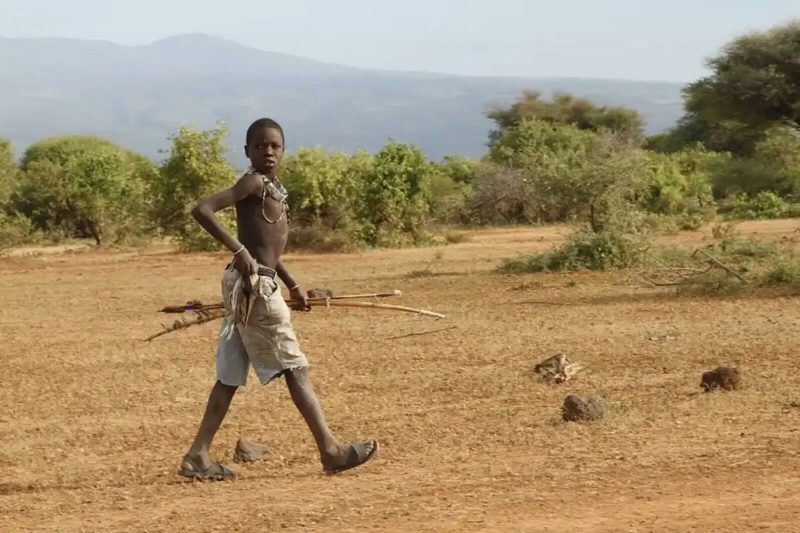
A boy carrying a bow and arrows walks across dry bush country at the foot of a hill.

Cards

Credit and debit cards work in the cities, at the airport, and at larger lodges and hotels, usually with a surcharge of a few per cent for the transaction. Visa is more widely accepted than Mastercard. American Express is rarely accepted.

Cards do not work in the parks, at most camps, at villages, or for tips. A camp may have a card machine that depends on a mobile signal that is not there that day. Never rely on a card for anything you need to pay for on the road.

Tell your bank you are travelling, so that a Tanzanian transaction is not blocked as suspicious. And carry a second card, kept separately, in case one is lost or swallowed.

A Maasai herder in a red shuka standing with his cattle on green grass.

How much to carry

For a week on safari, the cash you need is for tips, drinks that are not included, souvenirs, and any activity or fee not in your quote. Your operator's tipping guideline is the largest item and the one to plan first.

Beyond that, a moderate float of dollars in small notes for the unexpected, and some shillings for markets and small purchases. Small notes matter: breaking a large bill in the bush is difficult, and a lodge may not have change for a large dollar note.

Carry the cash in a money belt or a zipped inside pocket, split between two places, with the bulk locked in your main bag at camp. Camps are safe places. The risk is losing a wallet on the road, not theft.

A Maasai village of round thatched houses inside a thorn fence, above a wide valley.

Prices, and haggling

Prices in shops, hotels and restaurants are fixed. Prices in markets and at roadside curio stalls are not, and bargaining is expected. Start well below the first figure, keep it good-natured, and stop when the price feels fair to you. The seller will not sell at a loss.

Carvings, fabrics and beadwork are cheaper at village cooperatives and markets than in lodge shops, and more of the money reaches the maker.

Cultural visits have set fees agreed in advance through your operator. Ask before the day what is paid and to whom, so that no negotiation happens in front of the community.

A visitor walking with Maasai men and women in bright shukas on a green hillside.

Before you fly

Order new US dollar notes from your bank, in a mix of small denominations, and check every note for damage.

Sort the tipping cash into envelopes at home, using your operator's guideline.

Tell your bank you are travelling. Carry two cards, separately.

Withdraw or change some shillings in Arusha or Moshi before the parks.

And keep a note of what you have spent from the tipping envelopes, so the last day does not arrive with the cash gone.

Questions

What currency is used in Tanzania?
The Tanzanian shilling for everyday things. US dollars are widely used for tourism payments, tips and hotel bills. Bring dollars in recent, undamaged notes. Old or torn bills are refused.
Can I use a credit card on safari?
In cities, at the airport and at larger lodges, with a surcharge. Not in the parks, at most camps, in villages or for tips. Carry cash for the road, and tell your bank you are travelling.
Are there cash machines in the parks?
No. Cash machines are in Arusha, Moshi, Dar es Salaam and Stone Town. Whatever you carry into the parks has to last the week.
How much cash should I bring on safari?
Enough for tips, following your operator's guideline, plus a float in small dollar notes for drinks, souvenirs and the unexpected, and some shillings for markets. Small notes matter. Large bills are hard to break.
Why are old dollar notes refused?
Banks and businesses in Tanzania accept only recent series of US dollar notes, in good condition. Ask your bank for new notes and check them for tears and marks before you fly.
Should I haggle in Tanzania?
In markets and at roadside stalls, yes. It is expected. In shops, hotels and restaurants, prices are fixed. Keep it good-natured and stop at a price that feels fair.
Keep reading

Other guides

All guides

Still have a question?

Ask us directly — we answer every message ourselves.

Talk to a safari expert on WhatsApp (opens in a new tab)