The Great Migration, Month by Month
Roughly where the herds are through the year, why the timing moves, and how to plan around something nobody can schedule.
Last updated
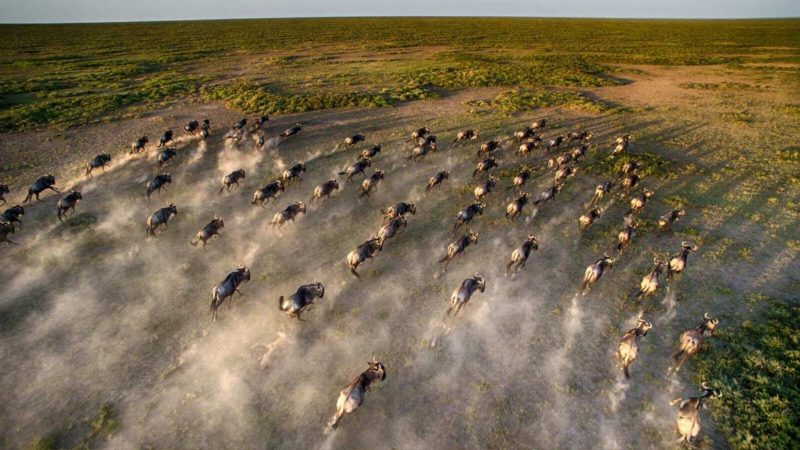
The migration isn't a single event or a fixed route. It is a very large number of wildebeest, zebra and gazelle moving continuously in response to rainfall and grazing, in a roughly circular pattern through the Serengeti ecosystem and into Kenya.
Because it follows rain, the timing shifts from year to year. This is the usual pattern, not a schedule, and anybody offering you a guaranteed date for a river crossing is selling something they don't control.
Roughly December to March — the southern plains
The herds are on the short-grass plains of the southern Serengeti and around Ndutu. This is calving: an enormous number of calves born in a compressed window, and the densest predator activity of the year. Cheetah do particularly well on this open ground.
For anyone more interested in wildlife behaviour than in a specific photograph of a river, this is arguably the best time of the whole cycle.
Roughly April and May — moving north and west
As the long rains arrive the herds begin drifting northwest through the central Serengeti. The columns can be spectacular. This is also the wettest period, some camps close, and it's the least predictable stretch to plan around.
Roughly June and July — the Western Corridor and the Grumeti
The herds push into the Western Corridor toward Lake Victoria and encounter the Grumeti River. Crossings here are smaller and less publicised than the Mara crossings, and correspondingly less crowded.
Roughly July to October — the north and the Mara River
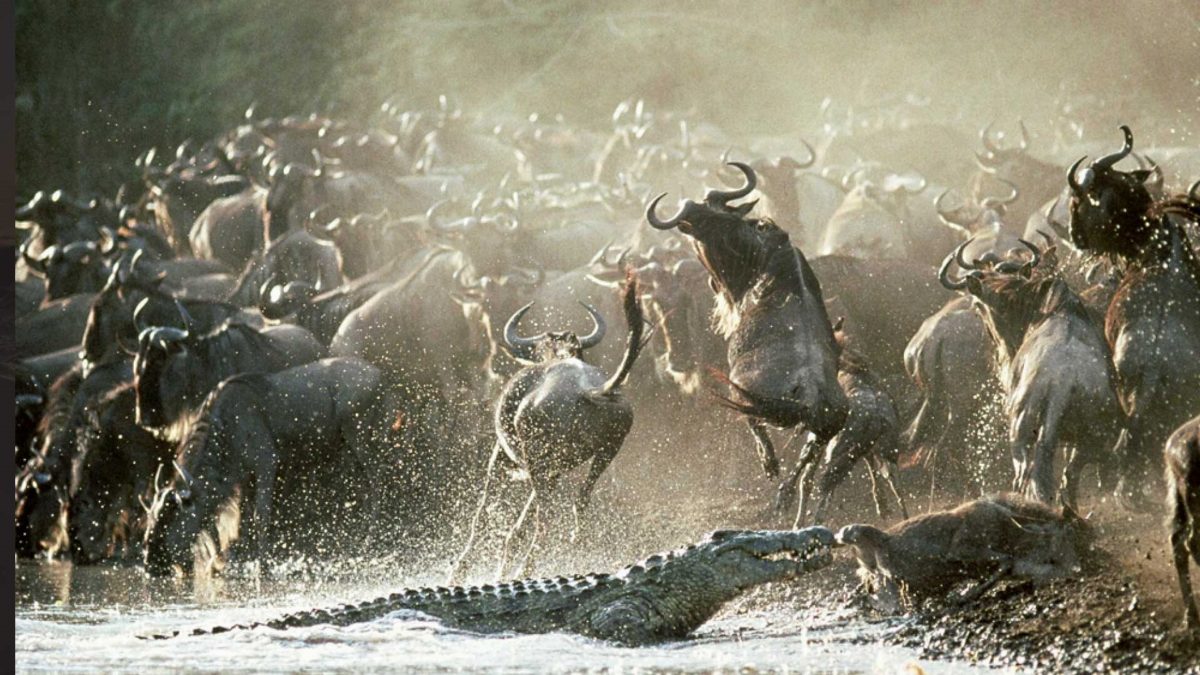
The famous window. Herds concentrate in the northern Serengeti and cross the Mara River, sometimes repeatedly and in both directions, depending on grazing on either bank.
Two things worth being realistic about. Crossings happen when the animals decide to cross, which can mean hours of waiting on a riverbank for nothing. And this is peak season in the north. A crossing may be watched by a great many vehicles.
Roughly November — moving back south
With the short rains the herds turn south again across the eastern plains, and the cycle restarts.
How to plan around it
Decide what you actually want. If it's a river crossing, you need the northern Serengeti in the later dry months, several days of patience, and acceptance that it may not happen. If it's sheer numbers and predator action, the calving season delivers more reliably and with fewer vehicles.
Then give yourself days. One night in the right region is a lottery ticket. Three nights is a plan. And stay in the right part of the park. The Serengeti is very large, and a camp in the centre during a northern crossing season means hours of driving before anything begins.
We will tell you where the herds have actually been recently, not where a calendar says they should be. That is the most useful thing any operator can offer on this subject.