
Zanzibar
Indian Ocean beaches an hour from the safari circuit

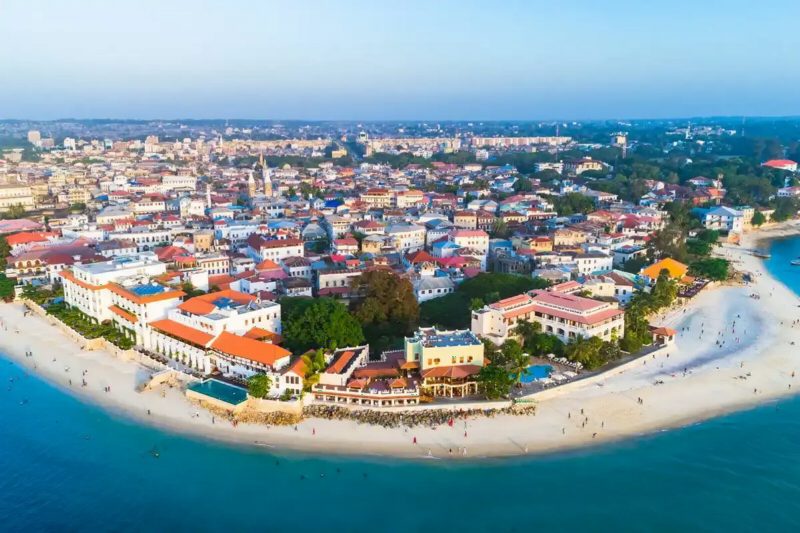


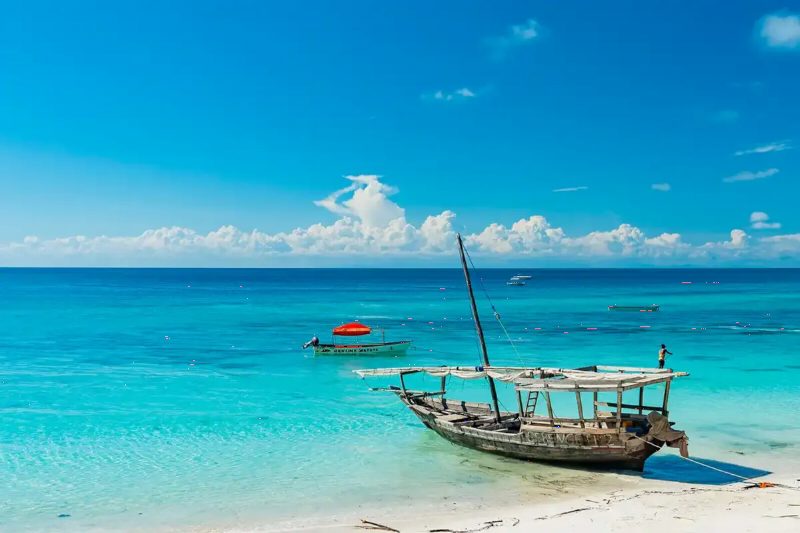
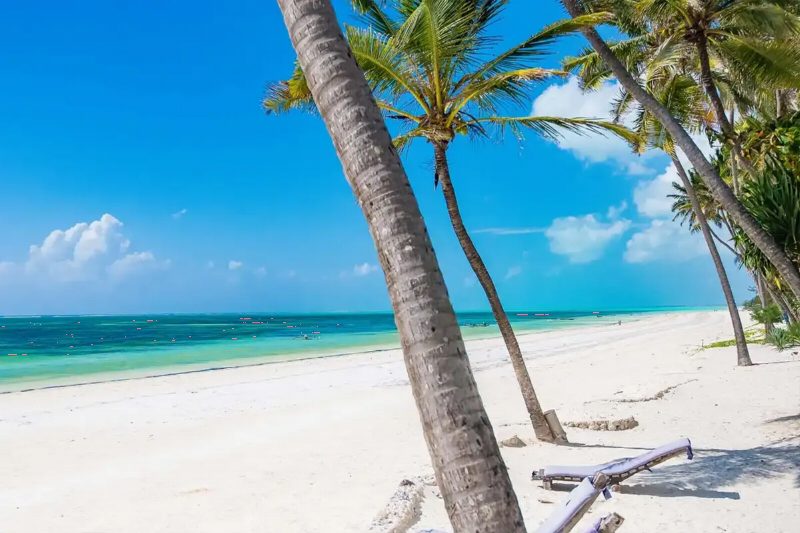


Zanzibar is a unique coral island lying in the Indian Ocean a short distance from Tanzania. With Pemba, and about 50 other islands, Zanzibar originally was an independent country until 1964 when it was united with Tanganyika to form Tanzania under President Julius Nyerere. Presently it has its own President and a degree of autonomy.
The island's history goes back many centuries. Its heyday came in the early 19th century when the Sultan of Muscat moved his court to Zanzibar. Spice cultivation was developed (particularly the clove tree), and the slave trade was at its height – Zanzibar became the most important town in East Africa.
Zanzibar is a unique and the right destination for heritage tourism. Apart from Stone town – a world heritage site, a collection of buildings have been marked as the most cultural and architecturally important in Zanzibar including Maruhubi Palace and Kizimkazi Mosques. Many of these demonstrate classic feature of this unique architectural and cultural synthesis.
This trip leads you through the Mangapwani cave which is a 30minute drive from Zanzibar town, up to 1911 the cave was a secret hideout from which the slaves were illegally led out to the sea through a secret passage and then transported by dhow after the official closure of the Slave Market in June 1873. The tour then proceeds to Nungwi in the North of Zanzibar which is an hours drive from the cave. Nungwi has crystal clear waters an excellent place for diving, snorkeling, swimming and sunbathing. As Zanzibar is a turtle conservation area you'll be able to see the natural turtle aquarium here. In this tour we also take you to a site where local villagers build dhows and boats to date using traditional tools.
The drive from town to the South takes one hours. On your way you might get a chance to see the famous Red Colobus Monkeys of the Jozani Forest. Kizimkazi fishing village is the home of several schools of the bottle-nosed dolphins, here you're taken by boat out into the sea to view the dolphins and if lucky will be able to swim quite close to them as they're very friendly and playful, Kizimkazi is also the site of a 12th Century Mosque, the earliest evidence of Islam in East Africa.
The tour starts from wherever the client wants to be picked up. One gets a comprehensive view of the Stone Town, it's sand and stone ancient built houses, some of them have Arab/Indian carved doors and the architecture which helps to make Zanzibar famous.
We then proceed to the main City market which was opened in 1904, where tropical fruits, vegetables, spices and fresh fish from the island are sold.
Why visit Zanzibar
Zanzibar is an archipelago off Tanzania's east coast, and for most safari travellers it's the second half of the trip, not the reason for it. That is a reasonable way to treat it: after a week of dawn starts and long drives, the islands ask nothing of you.
Stone Town, the old quarter of Zanzibar City and a UNESCO World Heritage Site, deserves at least a night. It is a dense grid of coral-stone buildings, carved doors and markets, carrying layers of Swahili, Omani, Indian and European history. Beyond it the island divides by coast: the north tends to stay swimmable through the tidal cycle, while the east has wide sand flats that empty dramatically at low tide and bring the kitesurfers when the wind is up.
Practical notes
Wildlife
Zanzibar red colobus, endemic to the archipelago, in the Jozani forest. Dolphins off the south coast. Reef diving and snorkelling around the smaller islands and Mnemba atoll. This is a marine and coastal destination, not a big-game one.
Getting there
By air. Flights connect Zanzibar with the northern safari circuit directly, so a safari-and-beach trip doesn't need to backtrack. Ferries run from Dar es Salaam on the mainland.
Best time to visit
June to October and December to February.

Life on the island
Zanzibar is not one place. The most useful thing to understand before you book is that the coast you choose decides what kind of holiday you get.
The east coast covers Paje, Jambiani and Bwejuu. This is the postcard sand, and it has a very large tide. At low tide the sea goes out several hundred metres and the lagoon becomes a shallow flat of seagrass and starfish, where local women harvest seaweed. It is beautiful. It also means you swim on a timetable. Paje is the kitesurfing centre of the island, and in season it is young, busy and loud.
The north covers Nungwi and Kendwa. The tide makes much less difference here, so this is where you go if you want to swim whenever you like. It is also the most developed part of the island, with the biggest hotels and the most nightlife.
The south-east and south-west are quieter, with fewer hotels and more villages.
The west coast, around Stone Town, is not a swimming coast at all. It is where the history is.
Stone Town deserves a night, not an afternoon. It is a UNESCO World Heritage site of coral-rag alleyways and carved doors, with a layered Omani, Indian, Persian and African history. That history includes the island's central role in the East African slave trade. The old slave market site, and the Anglican cathedral built over it, are hard to look at and worth your time.

Combining the island with a safari
The safari-then-beach combination is the most common way people build a Tanzanian trip, and it works well for a straightforward reason: after five or eight days of early starts and long drives on corrugated roads, most people are genuinely tired, and the island is the right kind of nothing.
The order matters. Safari first, beach second. Reversing it means arriving at the mountain or the parks already relaxed and then doing the hard days at the end, and it means finishing your holiday on a 4am game drive.
Logistically, the connection is easy. Flights run from the Serengeti airstrips and from Arusha and Kilimanjaro to Zanzibar daily, and the flight is roughly an hour and a half from Arusha or a little over two hours with a stop from the Serengeti. Flying beats the long drive back to Arusha followed by a separate transfer.
Three nights is the practical minimum on the island, one of them in Stone Town if the history interests you. Five to seven is where it stops feeling rushed. Anything less than three and the transfer days eat most of it.
Zanzibar is a semi-autonomous part of Tanzania with its own immigration desk. You will pass through a check on arrival even on a domestic flight from the mainland, and you need your passport with you.
Visas, health, dress and the things worth knowing
Zanzibar requires every visitor to hold travel insurance covering medical treatment. You buy it through the designated provider, either on arrival or in advance, on top of any policy you already hold. This is enforced at the airport. Check the current rule before you fly, because the scheme has changed more than once.
Zanzibar is about 99 per cent Muslim, and how you dress outside hotel grounds matters. Cover shoulders and knees in Stone Town and in the villages. Swimwear is for the beach and the hotel, not the street. It is a small courtesy and people notice it.
Ramadan changes the island a lot. Many restaurants outside hotels close during daylight hours, and Stone Town is much quieter. The dates move each year.
Malaria tablets are generally advised for Zanzibar as well as the mainland. Get medical advice on what is right for you instead of relying on what a hotel tells you.
Tides govern the east coast. If being able to swim at any hour matters to you, book the north. Tide tables for your dates are published. Look at them before you choose a hotel.
The heaviest rain falls in April and May, with a shorter wet spell in November. July to March is the reliable window, and December to February is the hottest.
Visiting Zanzibar
Which part of Zanzibar should I stay in?
How many nights do you need in Zanzibar?
Should I do the safari or the beach first?
Do I need a separate visa for Zanzibar?
What should I wear in Zanzibar?
When does it rain in Zanzibar?

Want Zanzibar in your trip?
Tell us how long you have and we will build an itinerary around it.