4-Day Serengeti & Ngorongoro Safari
Places Lake Manyara, Serengeti, Ngorongoro
Four days from Arusha through Lake Manyara, the Serengeti and the Ngorongoro Crater, in a private…

Classic game-viewing in Tarangire, Lake Manyara, the Serengeti and the Ngorongoro Crater, in a private vehicle with your own guide.
A highlight of any Tanzania safari is the Serengeti National Park, the country's largest reserve, stretching over 5,700 square miles.
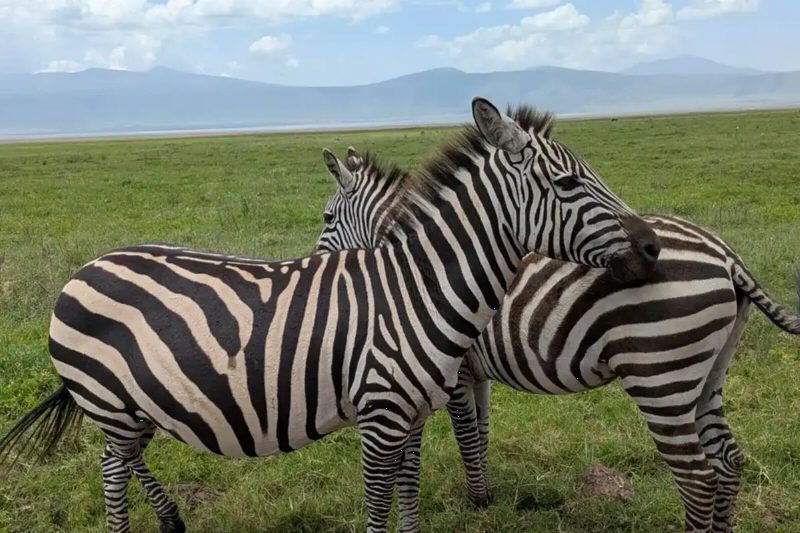
The greatest density of wildlife is in the Ngorongoro Conservation Area, known as Africa's Eden. You'll descend nearly 2,000 feet into the crater to watch large herds of zebra, wildebeest and gazelle, and the predators that follow them.
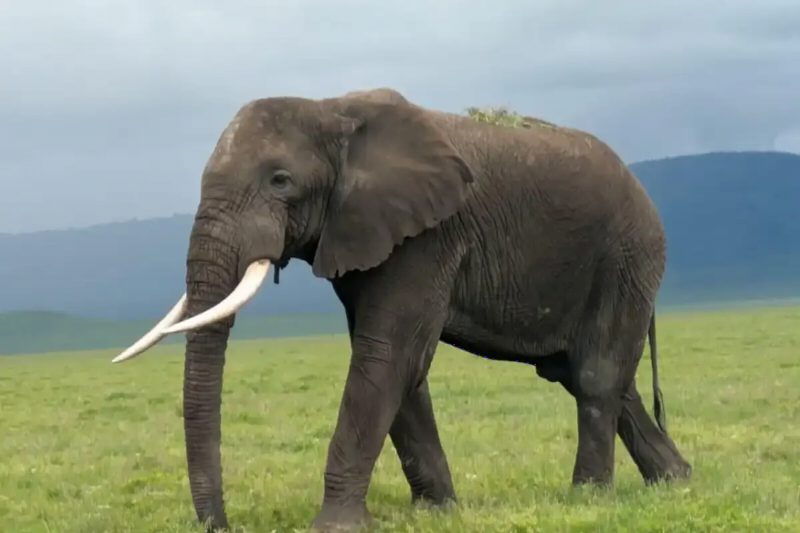
Lake Manyara National Park has dense forest, bush plains, cliffs and hot springs, and it is full of wildlife. It holds the world's largest concentration of baboons. South of Lake Manyara is Tarangire National Park, which has a large elephant population.
Then there is Mount Kilimanjaro, Africa's highest mountain, which draws climbers to its summit at 19,340 feet. You can also spend time with the country's indigenous peoples, or head out to the island of Zanzibar off the Tanzanian coast.
Places Lake Manyara, Serengeti, Ngorongoro
Four days from Arusha through Lake Manyara, the Serengeti and the Ngorongoro Crater, in a private…
Places Serengeti, Ngorongoro, Olduvai Gorge
Six days with two full days in the Serengeti, Olduvai Gorge on the way in and the Ngorongoro Crater to…
Places Tarangire, Ngorongoro, Lake Manyara, Lake Eyasi
Seven days through Tarangire, Lake Manyara and the Ngorongoro Crater, ending with a morning at Lake…
Places Lake Manyara, Ngorongoro, Serengeti
Seven days pairing the parks with cultural time: Lake Manyara, Lake Eyasi, the Ngorongoro Crater and the…
Places Lake Manyara, Serengeti, Ngorongoro
Eight days built around the herds: Lake Manyara, Ndutu in the calving season, two days in the Serengeti…
Places Lake Manyara, Serengeti, Ngorongoro
Nine days across the northern circuit at an unhurried pace: Lake Manyara, the Serengeti, two nights at…

The question that changes a safari most is how many days you give it. The honest answer depends on how much driving you are willing to do for each animal you see.
Four days reaches the Serengeti and the Ngorongoro Crater, and nothing else. It works, and it is the right answer when the alternative is not coming at all. But you spend more time driving per hour of viewing than on any other length.
Six days is where it starts to breathe. You get a full day in the Serengeti with two nights around it, and a separate crater day instead of a crater morning on the way home. Most first-time visitors should be looking here.
Eight or nine days is where you stop compromising. You get two full days in one region instead of one. You can add the southern plains or the far north. And you have enough margin that a slow morning costs you very little. This is also the point where flying one leg starts to make more sense than driving every kilometre.
Beyond nine days you are usually adding a second ecosystem, such as the southern parks or the coast, not more of the same. Nine days covers the northern circuit thoroughly.

Two things surprise almost everybody on a first safari, and neither is in the brochures.
The first is how much of the day is spent driving without much happening. The parks are enormous, sightings aren't evenly distributed, and the gaps between them are when your guide is reading tracks in the road, working out which way a pride moved overnight, and deciding where to be in an hour. That is the actual skill, and it's why two vehicles in the same area can have completely different days.
The second is the cold. The Serengeti sits at around 1,500 metres and the crater rim at around 2,300. Mornings from June to August in an open vehicle are genuinely cold, and a fleece and windproof matter more than another shirt.
The rhythm settles quickly: out before dawn for the first hour of light, back through the heat of the middle of the day while the animals lie up, out again in the late afternoon until the gate time or the light. Fighting that rhythm by insisting on driving at noon produces long hot hours and very little.
Nothing is guaranteed. Any operator who promises you a leopard, a crossing or a kill is promising something the animals haven't agreed to.

Wear neutral colours: khaki, olive, grey, brown. This is not about camouflage, which makes no difference from a vehicle. It is because bright white and black attract tsetse flies, and pale colours show the dust less. Avoid blue and black in particular, because tsetse are drawn to them.
Pack layers, not bulk. Mornings in an open vehicle are cold at 1,500 metres, and by ten it is hot. A fleece, a windproof and a sun hat cover almost everything.
Bring binoculars, one pair each. This is the item people most often leave behind, and the one that most changes what you see. If two of you share a pair, one of you is always waiting.
If you are flying any internal leg, bring a soft bag, not a hard suitcase. The limit on light aircraft is usually 15 kilograms in a soft bag, and it is enforced.
Bring cash in small notes for tips and curio stalls. You cannot use cards in the parks.
Three things to leave at home. Camouflage clothing, which is restricted in Tanzania and can cause you real problems. Drones, which are banned in the parks. And more clothes than you need, because most camps will do your laundry.
No operator can guarantee a sighting. Not a leopard, not a kill, not a river crossing, not a rhino. Anyone who does is promising something the animals haven't agreed to.
You can plan to be in the right region in the right month with enough days to be patient, in a vehicle that can stay when the sighting is good. That converts luck into odds, and odds is the honest product.
The big five is a hunting-era term, not a wildlife one, and rhino is the difficult member of it. Black rhino are seen in the Ngorongoro Crater, usually at distance and through binoculars. The other four are realistic on a normal northern-circuit trip.
Vehicles are shared space in a public park. A good sighting attracts other vehicles, and off-road driving is banned in the Serengeti except in designated areas. A guide who stays on the track is following the rules.
And nothing is on a schedule. Some of the best hours of a safari are the ones where you sat still and waited.

If there's one animal you particularly want to see, choose the parks around it instead of hoping.
Tarangire has the elephants, and in the dry months the numbers are hard to believe. Ngorongoro Crater gives you the highest density of game in the smallest area, which makes it the most reliable single day on the northern circuit. The Serengeti is where the migration is, but it's also the best park for lion, and its sheer size means you can watch something happen without an audience. Lake Manyara has the baboons and the birdlife.
Nobody can promise you a particular animal on a particular day. You can stack the odds by being in the right park at the right time of year, and by giving it more than one morning.
Six days minimum for a comfortable first safari, the central Serengeti and the crater if your dates are fixed, and binoculars for each person. Nothing is guaranteed. Being in the right place with enough days is the part you can plan.
Tell us your dates and we will put something together.