Safaris
Kilimanjaro
Destinations
Experiences
Travel guide
About
Contact Call +255 764 006 061 Plan Your Safari
Destination

Serengeti National Park

Endless plains and the great migration

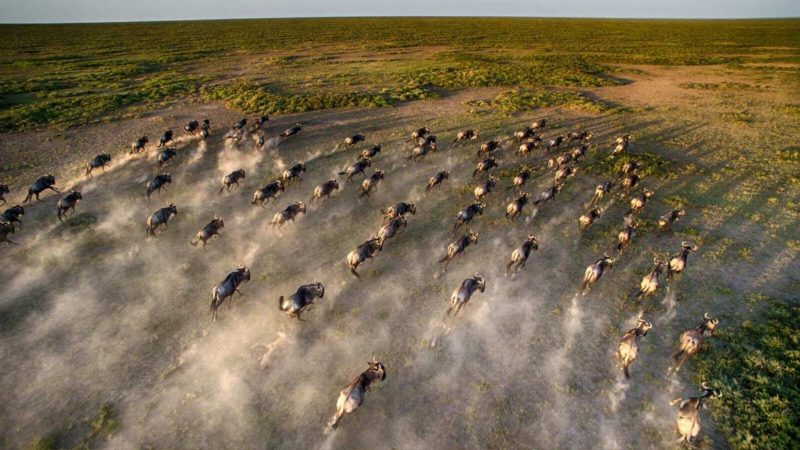
A small group of wildebeest standing close together in tall grass.
A line of wildebeest walking toward the camera through tall grass.
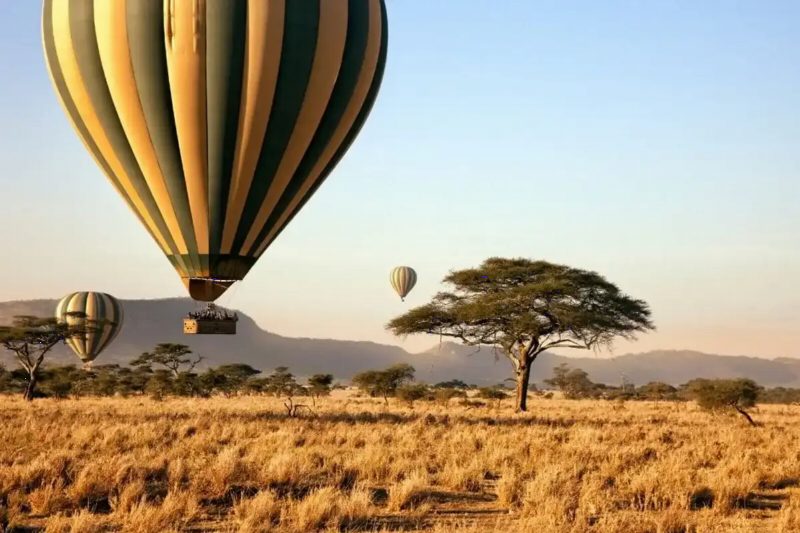
A striped hot-air balloon lifting off above grassland and a single acacia, with another balloon behind.
A male lion with a thick mane lying in long golden grass.
A cheetah licking its cub's face as they sit in the grass.
Dark wildebeest bunched together in dim light.
Hot-air balloons rising over golden grassland and an acacia tree in early morning light.
A zebra standing among thin branches in dry bush.
Size 14,763 sq km (5,700 sq miles)
Location 335km (208 miles) from Arusha, stretching north to Kenya and bordering Lake Victoria to the west
Best time Year-round. Calving in the south January to February. River crossings in the north July to October.
About the park

The Serengeti is Tanzania's oldest and most popular national park, and a World Heritage Site. It is best known for the migration, when well over a million wildebeest move through the park in search of fresh grazing. More than 200,000 zebra and 300,000 Thomson's gazelle travel with them.

The migration is not a single event. It goes on all year. There is a frenzied three-week rut. There are columns of animals up to 40 km (25 miles) long crossing rivers where crocodiles wait. There is a short, intense calving period that produces more than 8,000 calves a day. Then the 1,000 km (600 mile) circuit begins again.

Even when the migration is elsewhere, the game viewing here is as good as anywhere in Africa. You'll see great herds of buffalo, smaller groups of elephant and giraffe, and thousands of eland, topi, kongoni, impala and Grant's gazelle.

Most people remember the space more than anything else. The plains run to the horizon, sunburnt gold for much of the year. After the rains they turn green and fill with wildflowers. There are wooded hills and tall termite mounds, rivers lined with fig trees, and acacia woodland stained orange by dust.

The park is popular, but it is big enough that you can watch a pride of lions hunt with nobody else in sight.

Balloon safaris, walking safaris, game drives, picnics and bush meals can all be arranged through your lodge or operator. There are also Maasai rock paintings and musical rocks to visit.

Why visit Serengeti

The Serengeti is large enough that where you go inside it matters as much as when. The southern plains around Ndutu are short-grass country, open and treeless, and this is where the wildebeest calve early in the year. The central Serengeti, the Seronera area, has the river courses and kopjes that hold resident game and predators all year, which makes it the most dependable region whatever the season. The north, toward the Mara River and the Kenyan border, is where the herds cross water later in the year. The west is a corridor running toward Lake Victoria.

Even without the migration the Serengeti carries some of the best game viewing in Africa: buffalo, elephant, giraffe, and very large numbers of eland, topi, kongoni, impala and Grant's gazelle, with the predator density to match.
Itineraries

Safaris that visit Serengeti

All safaris
Before you go

Practical notes

Wildlife

The wildebeest migration, plus resident lion, leopard, cheetah, spotted hyena and, in the right areas, wild dog. Elephant, buffalo, giraffe, topi, kongoni, eland, impala and Grant's gazelle year-round. Central Serengeti kopjes are reliable for lion. The Seronera valley is among the better places in Africa to look for leopard.

What to do there

Hot air balloon safaris, walking safari, picnicking, game drives, bush lunch/dinner can be arranged with hotels/tour operators. Maasai rock paintings and musical rocks.

Getting there

By road from Arusha. The distance is about 335 km (208 miles), so the drive is normally broken with a night at Tarangire, Lake Manyara or Ngorongoro. Airstrips inside the park allow the drive to be replaced with a light-aircraft hop in one or both directions.

Best time to visit

Year-round. Calving in the south January to February. River crossings in the north July to October.

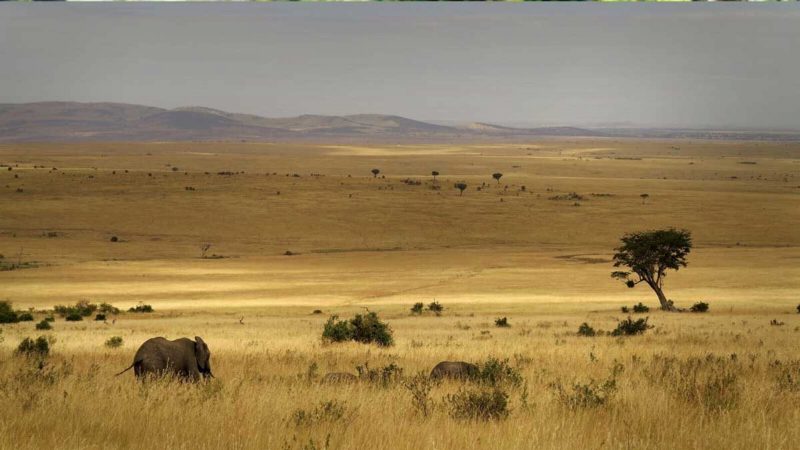
Elephants moving through waist-high golden grass on an open plain, with a lone acacia and low hills.
On the ground

What a day in the Serengeti actually looks like

You will usually be up before it gets light. The cold surprises most people. The Serengeti sits at about 1,500 metres, and from June to August the nights are genuinely cold. You do the first hour of the game drive in a fleece, with the roof hatch open and a flask of coffee between your feet.

That first hour is the important one. Lions have hunted overnight and are often still on a kill or still walking along the road. Leopards are heading back toward the sausage trees along the rivers. Cheetah use the low light and the cool ground to hunt, before the heat makes it impossible. By ten in the morning most of the cats are lying flat in the shade, and the plains look empty.

The middle of the day is quiet. That is normal, and it is not a wasted day. Some days you take lunch with you and eat under an acacia at a picnic site, with vultures sitting in the branches above you. Other days you go back to camp, sleep through the hottest hours, and go out again at four. The afternoon drive runs until the park gate closes, or until the light goes if you are staying inside the park.

Here is the part people do not expect. A lot of a Serengeti day is spent driving with nothing much happening. The park is huge and the animals are not spread evenly across it. Those quiet stretches are when your guide reads tracks in the road, works out which way a pride went, and decides where you need to be in an hour. That is the real skill, and it is why two vehicles in the same area can have completely different days.

When to go, month by month

Dry Shoulder Green Long rains

January

Green, warm, and busy in the south. The herds are on the short-grass plains. The centre around Seronera holds its resident lion, leopard and cheetah as it does all year.

February

Calving on the southern plains and the strongest predator month of the year. The centre is quieter than the south this month, which suits anyone who wants space.

March

Green and thinning out. The herds begin moving north, the rains build, and rates fall from mid-month.

April

The long rains. The western corridor roads can become genuinely difficult and some camps close. Very few vehicles, very green, very cheap.

May

Wet and quiet, with the herds moving through the centre and west. The Grumeti area starts to matter toward the end of the month.

June

Drying out. The western corridor is at its brief best, the centre is reliable as always, and the first herds may reach the north late in the month.

July

Dry and busy. The north begins its season. Seronera carries the most vehicles of any region because it's the most accessible.

August

Peak. The Mara River crossings in the far north, the highest vehicle numbers of the year everywhere, and the best visibility.

September

The second crossing month and marginally quieter than August. Dust in the air makes for good backlit photography at dawn.

October

Dry until the short rains break late in the month. The north empties as the herds turn south.

November

Short rains, green country and thin traffic. The herds move south through the centre and east. Under-booked and good.

December

Greening fast, with the herds arriving on the southern plains. Christmas and New Year are the most expensive fortnight of the year.

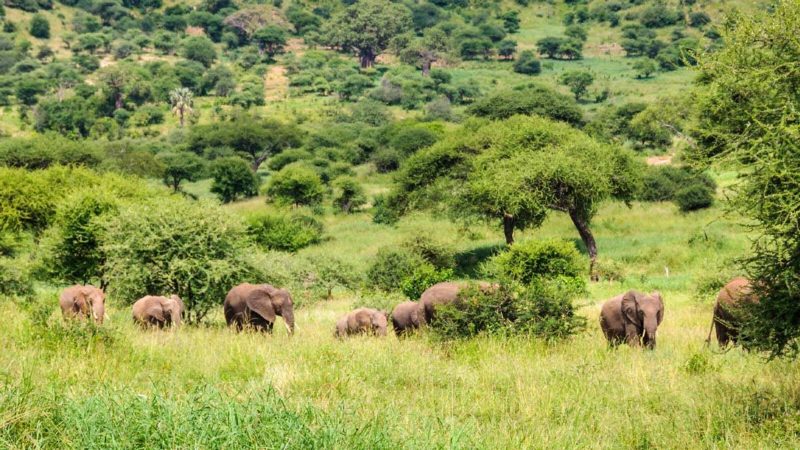
A large herd of elephants moving across a green plain under white clouds.
Planning

How many days you need, and where to stay

The most common planning mistake is treating the Serengeti as one stop on a list.

It covers about 14,750 square kilometres, which is larger than Northern Ireland. Driving from Seronera in the centre to Kogatende in the far north takes most of a day on rough road. One night in the Serengeti buys you an arrival afternoon and a departure morning. That is not really a visit.

Two nights in one area is the realistic minimum. Three is where it stops feeling rushed.

If you are coming for the migration, stay in the region the herds are actually in on your dates. Do not stay in the centre and drive to them. Either accept the long drive, or take the short flight to an airstrip nearer the herds.

The central Serengeti, around Seronera, is the safe choice when your dates are fixed. It holds resident lion, leopard, elephant, buffalo and giraffe in every month of the year, whether or not the migration is anywhere near. The north is a specialist choice for the river crossing season. The west is quiet, green and underrated outside the short Grumeti window.

On any trip of a week or more, think about flying one leg. A drive between the crater and the northern Serengeti can eat a whole day. Flying turns it into a short hop, and the money buys you back a full day of game viewing.

Practical

Fees, roads and the things that catch people out

Park entry is charged per person for each 24-hour period. Your operator pays it as part of the trip cost, along with concession fees at camps inside the park boundary. TANAPA sets the rates and changes them from time to time. Treat any figure you read online as provisional, including one in a quote from last season, until it is confirmed for your travel dates.

Off-road driving is not allowed in the Serengeti except in a few marked areas. If your guide stays on the track at a sighting, they are following the law, not being unhelpful.

Most camps have no mains power. Expect solar, limited charging hours and no hair dryer. Mobile coverage is patchy and mostly absent away from Seronera. Bring cash in small notes for tips and curio stalls, because you cannot use cards in the park.

The roads are corrugated gravel and they are hard on people as well as on vehicles. If you have a back problem, tell us when you book. It changes how far it is sensible to drive in a day, and it changes which route makes sense for you.

Questions

Visiting Serengeti

How many days do you need in the Serengeti?
Two nights is the realistic minimum and three is where it stops feeling rushed. The park is around 14,750 square kilometres and driving between regions takes hours. A single night buys you an arrival afternoon and a departure morning, not a day of game viewing.
Can you guarantee I will see a river crossing?
No, and nobody can. The herds cross the Mara repeatedly in both directions between roughly July and October, but they may wait on a bank all day and cross at four in the afternoon or not at all. Three or four nights in the northern Serengeti during the season gives you good odds. A one-night stop gives you a lottery ticket.
Is the Serengeti better than the Masai Mara?
They are the same ecosystem divided by a border. The Serengeti is roughly fifteen times larger, which means more space, fewer vehicles per sighting and longer drives. The Mara is more compact and easier to cover in a short trip. If you have four days, the Mara is efficient. If you have a week, the Serengeti gives you more.
When is the cheapest time to visit?
April and May, during the long rains. Camps discount heavily, the parks are close to empty and the landscape is at its greenest. The trade-offs are real. Some camps close, the western roads can become difficult, and afternoon storms are routine.
Is it cold in the Serengeti?
Colder than most people expect. The park sits at around 1,500 metres and early mornings from June to August are genuinely cold in an open vehicle. A fleece and a windproof layer matter more than another shirt.
Do I need to fly, or can I drive everywhere?
You can drive the whole circuit, and many people do. Flying one leg becomes worth considering on trips of a week or more, particularly to the northern Serengeti, where the drive from the centre takes most of a day in each direction and the flight takes under an hour.
Build it in

Want Serengeti in your trip?

Tell us how long you have and we will build an itinerary around it.

Talk to a safari expert on WhatsApp (opens in a new tab)