Safaris
Kilimanjaro
Destinations
Experiences
Travel guide
About
Contact Call +255 764 006 061 Plan Your Safari
4 days, 3 nights

4-Day Serengeti & Ngorongoro Safari

A short northern circuit for travellers with limited time

Lions lying along the branches of a spreading acacia tree.
A line of safari vehicles parked along a track on the crater floor.
Green farmland and trees in the highlands, with a distant ridge under a bright blue sky.
A hot-air balloon drifting low over golden grassland at sunrise.
An elephant walking through a herd of wildebeest on dry grass.
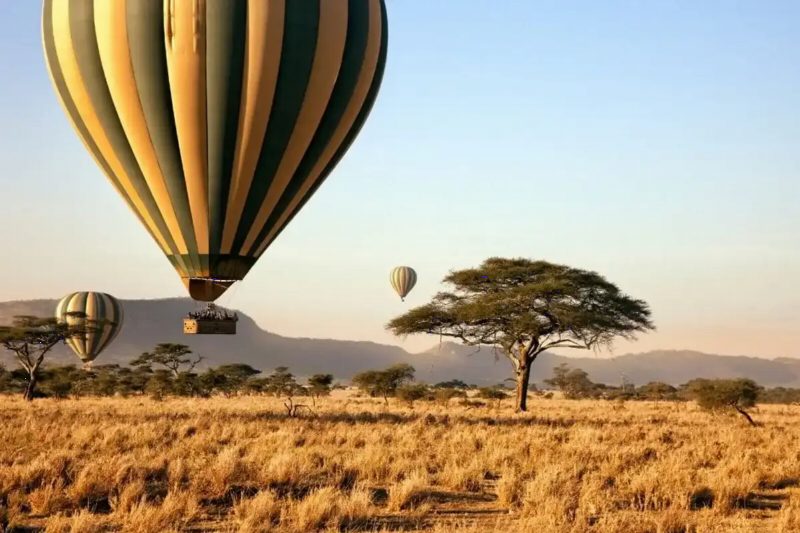
A striped hot-air balloon lifting off above grassland and a single acacia, with another balloon behind.
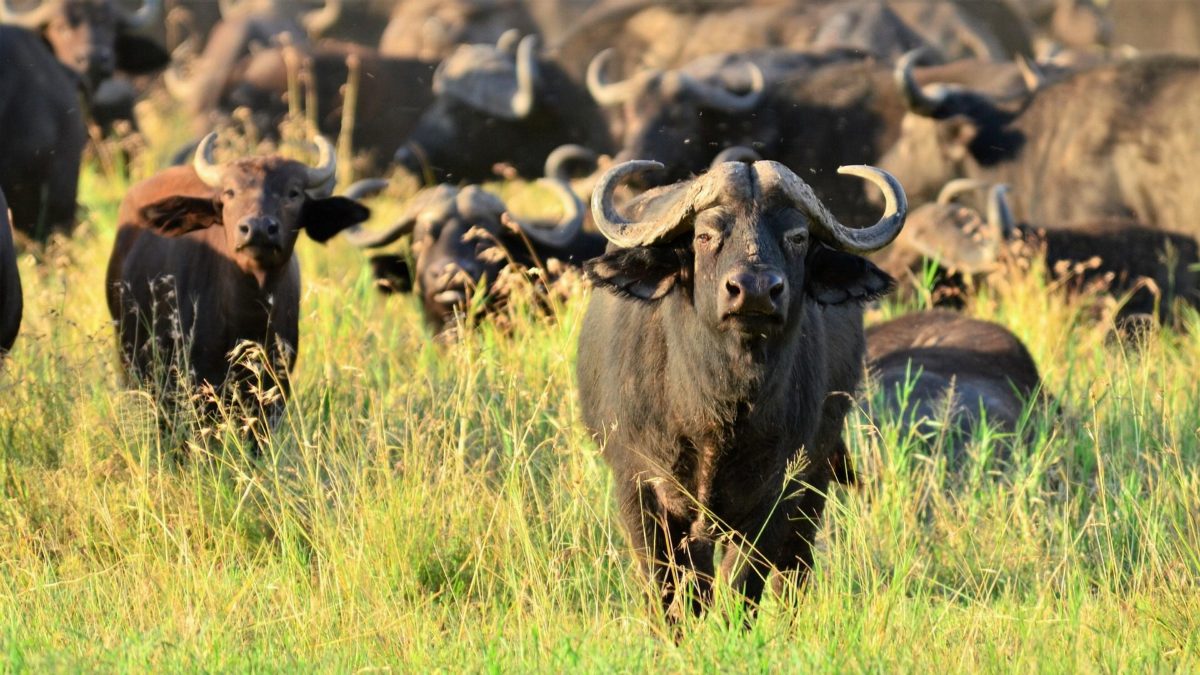
A herd of buffalo in long grass, the nearest bull facing the camera.
A safari vehicle parked in long grass as the sun sets red behind flat-topped acacias.
Overview

Four days is the shortest trip that still reaches the Serengeti. Anything shorter turns into a long drive with a short game drive at the end of it.

You travel west from Arusha to Lake Manyara, then up onto the Serengeti plains for a full day, and come home over the Ngorongoro Crater.

The order is deliberate. Lake Manyara on day one is a short drive, so you are in the vehicle and watching animals the same afternoon you land. You get groundwater forest, troops of baboons and the wall of the Rift Valley. The Serengeti day in the middle is the heart of the trip. The crater comes last, and that is the right way round. After two days of wide open plains, dropping onto the crater floor with walls all around you feels completely different.

On four days you give up time. You get one full day in the Serengeti instead of two or three. That means you see the central area around Seronera, but not the north or the west. If your dates are short and fixed, that is a fair trade. If you can spare six days, take six.

This route works in any month. The central Serengeti holds animals all year, whether or not the migration is nearby, and the crater animals do not move at all.

Day by day

The itinerary

Arusha – Lake Manyara Day 1

You leave Arusha after breakfast and drive west. Within an hour the town gives way to Maasai grazing land, with the long wall of the Rift Valley escarpment ahead of you. Lake Manyara is about two hours away on good tarmac. The park entrance takes you straight into groundwater forest. It is tall, dark and dripping, fed by springs, not rain. It is a startling first impression if you were expecting open plains. Baboon troops sit in the road and blue monkeys move overhead. After a few kilometres the forest opens onto acacia woodland and the floodplain along the lake. You spend the afternoon working north to south through the park. There are elephant in the woodland, hippo in the pools at the northern end, and, if the water level is right, flamingo out on the soda flats.

Lake Manyara – Serengeti Plains Day 2

A long driving day, and the one that gets you onto the plains. The road climbs the escarpment above Manyara, runs through the farmland around Karatu, and then up onto the rim of the Ngorongoro Crater, where the first view down onto the floor stops most people mid-sentence. From there the road crosses the conservation area westward, dropping steadily onto open grassland where the horizon flattens out and the acacias thin to nothing. You enter the Serengeti at Naabi Hill. Take the short climb for the view over the plains it guards. The last stretch to the central Serengeti is a game drive in its own right. This is the country the park is famous for, and the first giraffe against an empty sky is usually the photograph people keep.

Serengeti Plains – Ngorongoro crater Day 3

The full Serengeti day, and the centre of this itinerary. Start early, even in the cold. In the first hour after dawn the cats are still moving and the light is at its best. The Seronera river valley is the focus. It has permanent water, with acacia and sausage trees along the banks, resident lion prides, and the most reliable leopard habitat on the northern circuit. The middle of the day is quiet, and that is by design. You have lunch under a tree or back at camp while the animals lie up in the shade. The afternoon drive then runs until the light goes. The time between sightings is the part people do not expect. Your guide reads tracks in the road, works out which way a pride moved overnight, and decides where you need to be in an hour.

Ngorongoro crater – Arusha Day 4

You leave the Serengeti in the morning with a game drive on the way out, recrossing the plains toward the conservation area. The road climbs back into the highlands and the vegetation changes completely, from open grass to montane forest on the crater rim within the space of an hour. The crater descent is the day. Vehicles have six hours on the floor and the descent road opens at six-thirty, so the earlier you're through the gate the more of it you have to yourself. On the floor you're in an enclosed world: soda lake, Lerai forest with its old elephant bulls, open grassland with lion, and black rhino out toward the swamp at distance. Lunch is at the designated picnic site by the hippo pool.

Ngorongoro crater – Moshi Distance: 273km Meals: Breakfast & Lunch included Day 5

The last morning is the drive back east. The road out of the highlands drops through Karatu and Mto wa Mbu, back past the Manyara escarpment, and onto the tarmac toward Arusha and the airport. It is around 270 kilometres and takes most of the middle of the day with a stop for lunch. There is usually time for a curio stop at Mto wa Mbu if you want carvings or fabric, and prices there are much better than at the airport. Most international flights leave Kilimanjaro late in the evening, so the timing works without a rush, and there's generally room for a day room in Arusha before the transfer if you want a shower and somewhere to repack.

The detail

What's included

Included

  • Park entry fees for all parks on the itinerary
  • Private 4×4 Land Cruiser with a pop-up viewing roof
  • Professional English-speaking driver-guide
  • Accommodation as listed in the itinerary
  • Meals as shown (B = breakfast, HB = half board, FB = full board)
  • Drinking water during game drives
  • Airport transfers

Not included

  • International flights and visa fees
  • Travel and medical insurance
  • Tips for your guide and camp staff
  • Drinks, laundry and personal items
  • Optional activities such as balloon flights
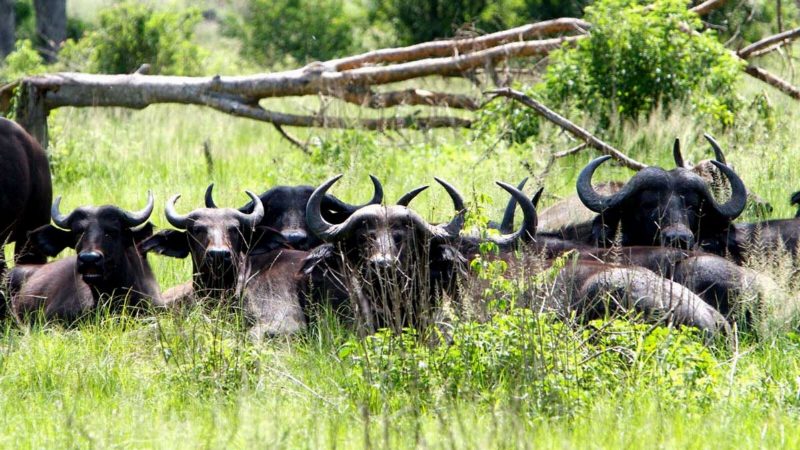
A herd of buffalo lying in long green grass beside a fallen tree, several looking at the camera.
Is this right for you

Who this trip suits

Four days is a first safari for people whose dates won't stretch. It suits travellers adding a short safari to a longer trip elsewhere in East Africa, people with a fixed week who also want Zanzibar, and anyone who wants to see the Serengeti and the Ngorongoro Crater and is prepared to trade depth for reach.

It isn't the right trip for a photographer, for anyone who has travelled a long way specifically to see the migration, or for a family with young children. The driving-to-viewing ratio on a four-day route is the highest of any itinerary here, and small children find that hardest.

The honest comparison is with the six-day route. Six days adds a second full day on the plains and a separate crater day instead of a crater morning on the way home, and it removes one long transfer. If your dates allow it, the six-day trip is better value per day even though it costs more in total.

Four days genuinely wins on a tight schedule where the alternative is not going at all. It reaches the two things most people come to Tanzania for, and it does so without the itinerary becoming a series of drives.

Zebras and wildebeest grazing among bare, dead trees at the edge of the lake.
On the road

How much driving to expect

Northern-circuit roads are a mix of good tarmac and corrugated murram, and the corrugation is the part nobody warns you about. Inside the parks the tracks are graded dirt that shakes hard at anything above walking pace, and a transfer day between parks can involve three or four hours of it.

This matters for three groups of people. If you have a back or neck problem, say so when you enquire: it changes the sensible daily distance and it may change which itinerary makes sense. If you get motion sick, the front seat and an open hatch help far more than tablets. And if you're travelling with young children, the driving is usually the thing they find hardest, not the animals.

Everything is done in a private vehicle with a pop-up roof, which means the day is yours. If you want to sit with one lion pride for an hour, you sit with it. If you want to be back at camp by eleven and out again at four, you do that. The itinerary sets the route, not the clock.

Distances on the northern circuit look small on a map and take much longer than the kilometres suggest. Arusha to the central Serengeti is a full day of driving, not an afternoon.

Questions

About this trip

Is four days long enough for a safari?
It is long enough to see the Serengeti and the Ngorongoro Crater properly and short enough that you feel the driving. If your dates can stretch to six days you get a second full day on the plains and a separate crater day, which is a much better trip. If they can't, four days reaches the two things most people come for.
Does this trip include the Ngorongoro Crater?
Yes, with a full descent on the fourth day. Vehicles have six hours on the crater floor from the six-thirty gate.
What is the accommodation like?
It varies with what you book. The trips are private and quoted individually, so the camp and lodge standard is agreed with you before the quote, not fixed by the itinerary. Say what you want when you enquire.
Can this trip be changed?
Yes. Every itinerary here's private and every one can be lengthened, shortened, re-ordered or re-based. The published route is a starting point, not a fixed departure.
Also consider

Other journeys

All safaris
Ready when you are

Ask us about this trip.

We will confirm availability, adjust anything you want changed and send a full quote.

Talk to a safari expert on WhatsApp (opens in a new tab)