Half day
Materuni Waterfalls
Around twenty to thirty minutes outside Moshi are the Materuni waterfalls. Because it is so close, it fits…

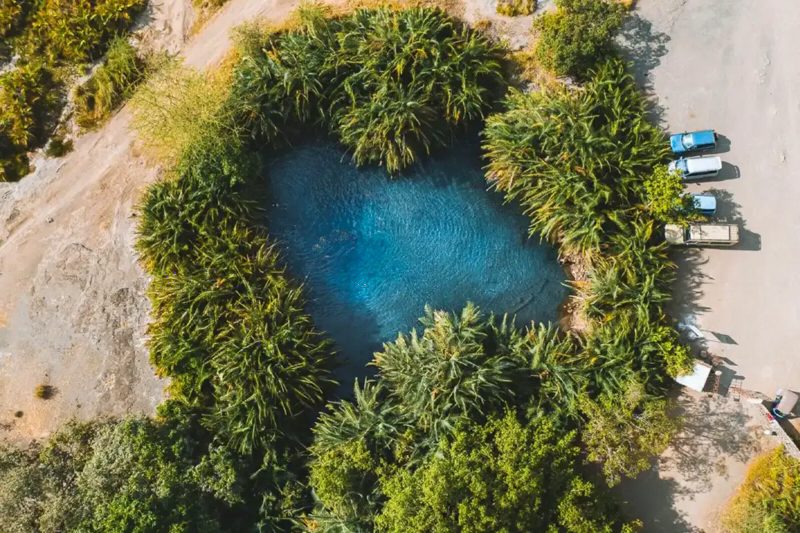
The Chemka Hot Springs lie about 40 kilometres from Moshi, in the village of the same name. They are underground springs of warm water that surface to form a clear, clean pond, ideal for swimming.
The pond is very deep — in places up to ten metres — but the water is so clear that you can see the bottom the whole time. It sits under lush trees, and on the shore you can set out a picnic, enjoy your snacks and dry off after swimming.
It is the most relaxed of the day trips out of Moshi and the one people most often add after a Kilimanjaro climb, when walking any distance has lost its appeal.
Day trips are quoted individually, because the cost depends on how many of you there are and where you are starting from. Transport, a guide and entry fees where they apply are arranged for you — tell us your dates and we will come back with a price and what it covers.
Most of these work well on an arrival or departure day, or as a rest day either side of a Kilimanjaro climb.
Chemka, properly called Kikuletwa, is a spring-fed pool in a grove of fig trees on the plain between Moshi and Arusha. There is nothing else like it within reach of either town.
The water comes up through the ground from Kilimanjaro, filtered through decades of volcanic rock. It arrives extraordinarily clear, and it stays a comfortable temperature all year.
"Hot springs" oversells it. The water is warm, not hot, at about body temperature. That is exactly why you can stay in it for hours.
The pool sits in an oasis of fig trees. Their roots grow down into and around the water, making underwater structures you can swim through and platforms you can jump from. People remember the clarity. You can see the bottom several metres down, and small fish work around your feet.
All around it is dry, flat, dusty acacia country, which makes arriving so startling. There is no gradual change. You come down a rough track and the green simply appears.
It gets busy at weekends and in the middle of the day, so start early.
Chemka sits roughly an hour and a half west of Moshi. The tarmac runs most of the way and the last stretch is a rough, dusty track across the plain that's slow and, in the wet season, occasionally difficult.
The drive itself passes through Maasai grazing country and the irrigated sugar and rice schemes on the plain, which is a side of the region most safari itineraries never show you.
Many operators combine Chemka with a stop at Lake Chala or at the Rundugai area, and some pair it with a Materuni morning. Doing both in one day makes for a very long one.
It is also the standard rest day after coming off Kilimanjaro, and the logic is sound: your legs won't take another walk, sitting still all day is a waste, and warm water is exactly what a body that has just descended six thousand metres wants.
The site is community-managed and there's an entrance fee paid locally in cash. Simple food and drinks are usually available. Bringing your own is safer.
Swimwear worn under your clothes. Changing facilities are basic to non-existent, and this is much the simplest solution.
A towel, and a dry bag or plastic bag for wet things afterwards.
Water shoes if you've them. The fig roots and the pool bed are uneven and there are places where footing matters.
Sun protection. There is shade under the figs but the drive and the walk in are exposed, and the plain is hot.
Cash in small denominations for the entrance fee and anything you buy on site.
Do not bring valuables you can't keep with you. There is no secure storage, and this is the single most common problem visitors report.
Be aware that the water is spring-fed and not treated, and that jumping from the trees is done at your own risk and without supervision.
The day runs to around six hours in total including the drive, and there's very little walking involved, which makes it the gentlest of the five trips here.
Chemka is spring-fed, so the water temperature and clarity are essentially constant year-round. Only the road and the crowd change.
The access track across the plain is dusty in the dry season and can be genuinely difficult after heavy rain. In April and May it's worth checking conditions before committing to the drive.
Timing within the day matters more than the season. The site is busiest from late morning through the afternoon, and at weekends it's busy with local visitors as well as tourists. Arriving early gives you the pool close to empty and the light coming through the figs, which is the version worth photographing.
The plain is hot from mid-morning onward and there's limited shade on the walk in from the parking area, so an early start is more comfortable as well as quieter.
Because it's warm, not hot, the water is pleasant in every month. This isn't a place with a season so much as a place with a time of day.
Chemka is close to several other things, which is why it's rarely done alone.
Njoro Forest is the standard pairing. It is a gentle shaded walk to a waterfall with a warm swimmable pool, from the same spring system. The two together make a genuinely good full day of forest and water without a hard climb in it.
Look out for Rundugai and the surrounding irrigated plain on the drive. Some trips include a short village walk.
Lake Chala is further east and makes a different kind of day, but the two are sometimes combined by operators willing to drive.
Moshi is the base for all of this and is around ninety minutes away.
Chemka is also the standard rest day after coming off Kilimanjaro, and the logic is sound: your legs won't take another walk, sitting still in a hotel is a waste of a day, and warm water is exactly what a body that has just descended several thousand metres wants.
A spring-fed pool in a fig grove roughly ninety minutes west of Moshi. Warm, not hot, extraordinarily clear, and with very little walking involved. It is the gentlest of the five day trips and the standard rest day after coming off Kilimanjaro.
Bring swimwear under your clothes, a towel, a dry bag, sun protection and cash for the entrance fee. Do not bring valuables. There's no secure storage and that's the most common problem visitors report.
Go early. The site is busiest from late morning onward and at weekends, and the pool close to empty with light coming through the figs is a completely different place from the pool at noon in August.
For a rest day, yes, clearly. It is ninety minutes each way for several hours in warm, extraordinarily clear water with almost no walking, which is exactly what a body that has just come off Kilimanjaro wants.
For a first-time visitor with limited days and a choice between this and Materuni, Materuni is the more memorable day. A waterfall, a forest walk and a coffee demonstration, against a swim.
The strongest version is both, on separate days from the same base in Moshi, or Chemka paired with Njoro Forest for a single day of forest and water.
There is no secure storage at the site and this is the most common problem visitors report. Take only what you can keep with you or leave in a locked vehicle with your driver, and leave anything you would mind losing at the hotel.
Half day
Around twenty to thirty minutes outside Moshi are the Materuni waterfalls. Because it is so close, it fits…
Full day
Lake Chala is a crater lake in a caldera on the border of Tanzania and Kenya, on the eastern edge of Mount…
Full day
Approximately one hour outside Moshi town lies Njoro Forest. By bicycle or simply on foot, you explore the…
Tell us your dates and where you are staying, and we will price it and sort the transport.